Archive

Monthly Archives: February 2013


CBS’ 60 Minutes labasted the credit reporting industry on Sunday evening citing an FTC investigation that revealed that upwards of 20% of Americans had “errors” in their credit reports and that 10% had errors that were so serious as to have a dramatic effect on their credit scores.  Credit reports are engrained into the financial culture of our lives at a level where even the smallest errors could cause increases in the cost of many products ranging from life insurance to auto and home loans.  Because I am in the real estate lending industry I’ve seen thousands of credit reports as a necessary part of the loan process I am able to provide a testimonial that a lower credit score can have a dramatic impact on the cost of borrowing home mortgage money.  In fact, if you consider a hypothetical 30 year fixed rate loan for $300,000 and compare the interest rate that would be offered to a qualified borrower with a credit score in excess of 740 as compared to one provided to a borrower with a 639 credit score you will find that the borrower with the lower score would pay $137.66 more per month or an extra $50,000 over the 30 year life of the loan. Layering into that equation the reality that the low credit score borrower’s homeowner and auto insurance policies would command higher premiums its easy to understand why it’s vitally important to know, manage and protect that credit score.  For Boomers entering the phase of their financial lives where every dollar commands an increasing amount of respect, having control over the information in their credit reports takes on even greater importance.

There is a fundamental difference between a Credit Report and a Credit Score.  While consumers are allowed to obtain a free copy of their credit reports annually from all 3 of the primary repositories of credit information those complimentary reports do not include the “predictive” score that lenders and underwriters use in their pricing calculations.  When a consumer logs on to the website, www.annualcreditreport.com , the option is available to obtain at no cost the raw data that exists in the files that each of the credit bureaus maintains for every potential borrower.   However, if the consumer is motivated to find out just exactly what their “score” might be they are directed to the sites of the individual repositories where there are any number of options available for obtaining that score, all of which require the payment of an upfront fee and often times the hard sell to subscribe to a recommended service.  The only other option for knowing a credit score is to request that information from a lender or insurance company that may have recently obtained a credit report on a customer’s behalf.  The exact formula for determining an individual’s score is a closely guarded secret in the industry and one that is changeable based on the performance of the entire database but certain general rules separating good from bad credit scores are typically well-known such as making sure all payments are made on time, the level of outstanding balances on revolving credit accounts is low relative to the available credit amount and there is an absence of foreclosure or bankruptcy activity.

It is important to understand that the repositories of this data, TransUnion (TU), Experian (XPN) and EquiFax (EFX) are best thought of like one would a library. If a reader checks a book out of the library and they are unhappy with the content of that book they are bound to be disappointed if their expectation is that the librarian will have an impact on influencing the author of said book to change the content.   At best, the librarian could contact the author and lodge the complaint on behalf of the reader but changes in the content must come from the author directly in future editions.  In much the same way, consumers that discover erroneous information in their credit reports are best served by making their complaint directly to the provider of that wrong information and then obtaining written evidence that the report is, in fact, erroneous.  While the methodology exists for consumers to lodge their complaints with the credit bureaus reporting said errors, the credit reporting agencies responsibility begins and ends with their attempt to “investigate” said error on behalf of the consumer.  Most often, that involves an electronic message to the creditor indicating that the consumer doesn’t agree with the way the information is reported in their file, followed by the electronic response from the reporter as to their opinion about the validity of that information.  It is NOT the role of the credit bureau to ajudicate a dispute between a creditor and borrower.  On the other hand, if a consumer is armed with written evidence provided by the creditor that the report is in error, the credit bureau will most times immediately make the change to the consumer’s credit profile after validating the written proof.  While other types of errors occur, including those involving mistaken identity, far and away the disagreement about how an account is reported in an individual’s credit file causes most of the challenges for consumers.  There is a good amount of rhetoric floating around as a result of the FTC’s investigation into credit reporting practices that changes in those methods will occur.  However, it’s likely that years will transpire before meaningful modifications in the way those errors are investigated and reported will take place.  The intevening period could be quite expensive for those Boomers needing to borrow money or obtain insurance coverage.

As Boomers approach the promised land of their golden years its important that they know exactly what lenders, insurance underwriters and in many cases, prospective employers will see when they obtain a copy of their credit report.

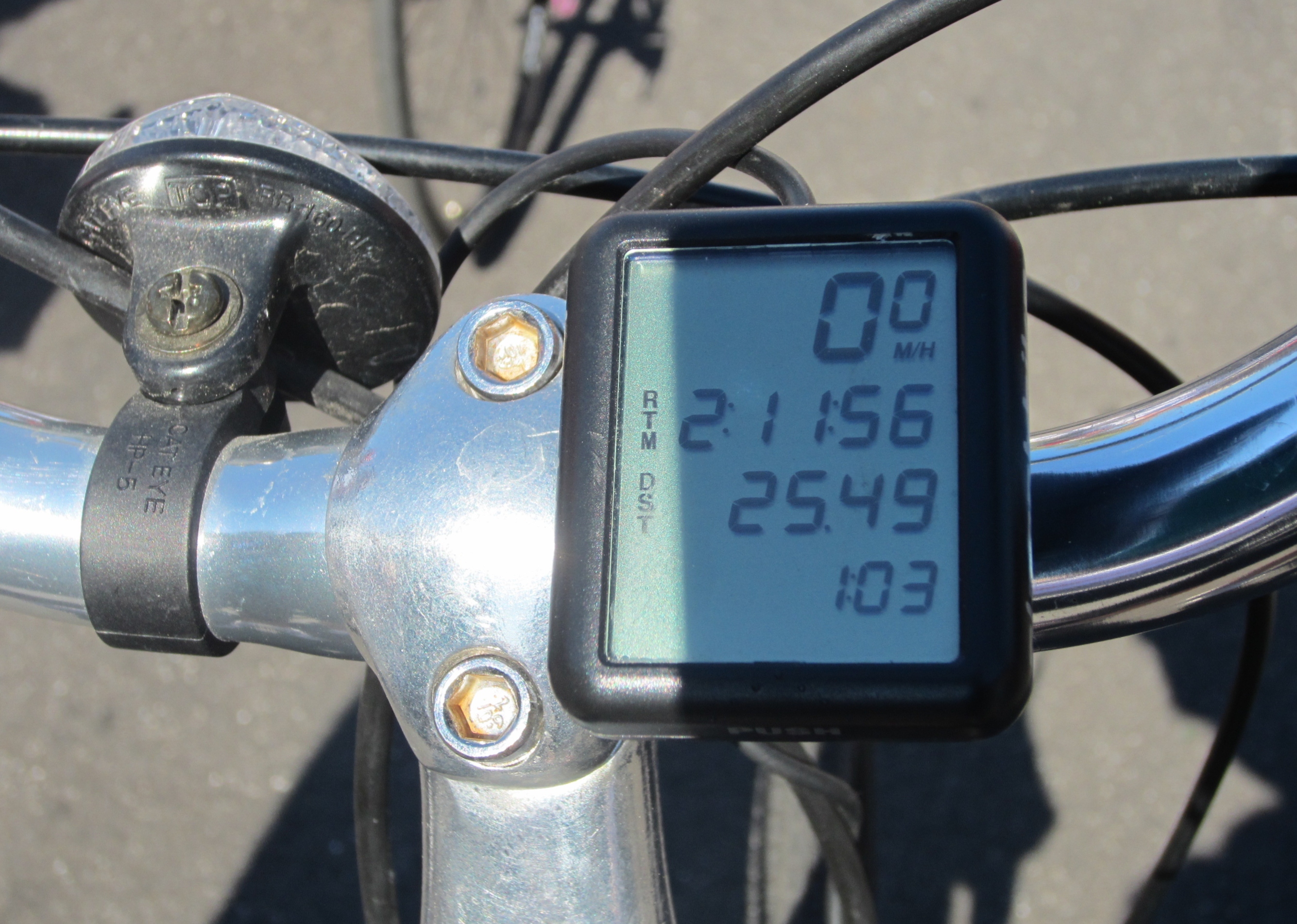
IMG_1610I suppose I’m a little disappointed with how sore I am this morning.  While I was looking forward to it I knew riding my bike 25 miles in the Tour de Palm Springs that was held yesterday morning wasn’t going to be easy but I had ridden that far, once before.  I know, I know; plenty of people run that far – I think they call it a marathon – but given the level of my fitness a few months ago this was a worthy goal.  On my bucket list, plain as day, is the goal to Ride my Bike for 40 kilometers (I think it seems like more than 25 miles that way, and, besides, it’s so international sounding).  Smack dab in the middle of my 60th year and perhaps 10 or 30 pounds overweight (or should I say 4 or 13 kilograms?  Sounds like a lot less, doesn’t it?). And, this Boomer of dubious physical conditioning, I thought pointing toward a 25 mile bike ride on this particular date was a worthwhile pursuit.  And, it wasn’t just 25 miles mind you; I rode my bike to my friend’s home (Syd and Joan) easily 3 miles from mine where we loaded up the bikes on the back of his SUV and headed to a parking lot that was another 1.5 miles from the start/finish line and then back again to make a grand total of 31 miles on the rock hard seat. It was more than I had anticipated (or should I say 50 kilometers – now that’s a nice round number!).  I could tell you about my recent bout of bronchitis too but then I could be accused of piling on.

The Tour de Palm Springs is an annual gathering of more than 10,000 cycling enthusiasts using every type of wheeled, self-propelled vehicle available today that participants can choose to ride along various routes ranging from 1 to 100 miles in and around the city of Palm Springs for the primary purpose of raising money for a number of charities and a getting a new T-shirt.  It’s anything but a race; in fact the organizers go way out of their way to deemphasize any competitive aspect of the ride although I heard the Public Address announcer more than once use the term “Race” only to quickly correct himself.  Event is the preferred term.  Upwards of $300,000 finds its way into the coffers of various local and national charities with the choice of designee up to the rider (I earmarked my portion of the $40 entry fee to the American Cancer Society – go figure?).

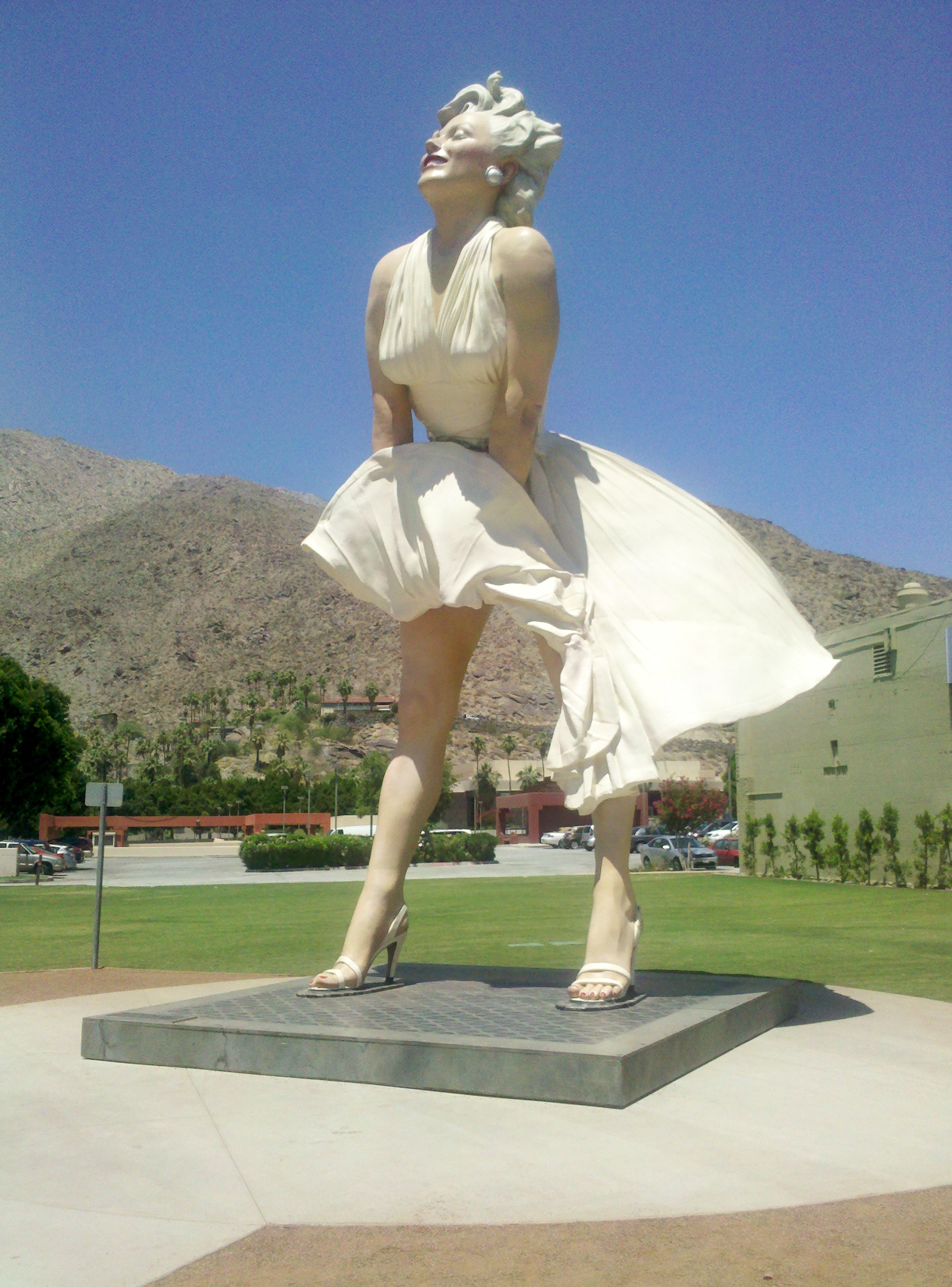
The day before the Event my wife and I decided to have lunch downtown within walking distance of theIMG_20120604_115132 Registration Booth right under the massive statue of Marilyn Monroe at the epicenter of Palm Springs on the corner of Tahquitz Canyon Way and Palm Canyon Drive.   I figured we would mosey on over to the pick up my wrist band after lunch and check out the vendor expo that was part of the celebration.  I had told Syd and Joan I would pick up theirs as well to save them from the exercise.  What I hadn’t counted on when I signed up for the Tour was dodging rain drops in the middle of California’s desert in February.  While it can happen, it rarely does.  But here we were with mid-day temps in the high 40’s and the wind chill deducting at least another 5 degrees and the sky spitting on us. I started questioning my sanity about entering this Event until I was handed a few free samples of various Clif products which went a long way toward smoothing over my angst.  It’s hard to beat free.

Figuring I needed to do a little “carbo-loading” the evening before my wife and I decided on pizza for dinner to the tune of the raindrops plinking on the window with the wind howling through the trees for accompaniment.  Then it was off to bed for a good night’s sleep in anticipation of the next day’s fun.  I awoke at 3:18 a.m. to the sound of a fierce wind whistling through the 10 foot setback between our home and the one next door cursing my luck of signing up for a monumental outdoor pursuit on the same day a hurricane was going to strike our normally calm and warm desert.  Further attempts at sleep were impossible so I hauled my soon to be sore butt out of bed and busied myself until it was time to make the appointed arrival at Syd and Joan’s by 8:30.

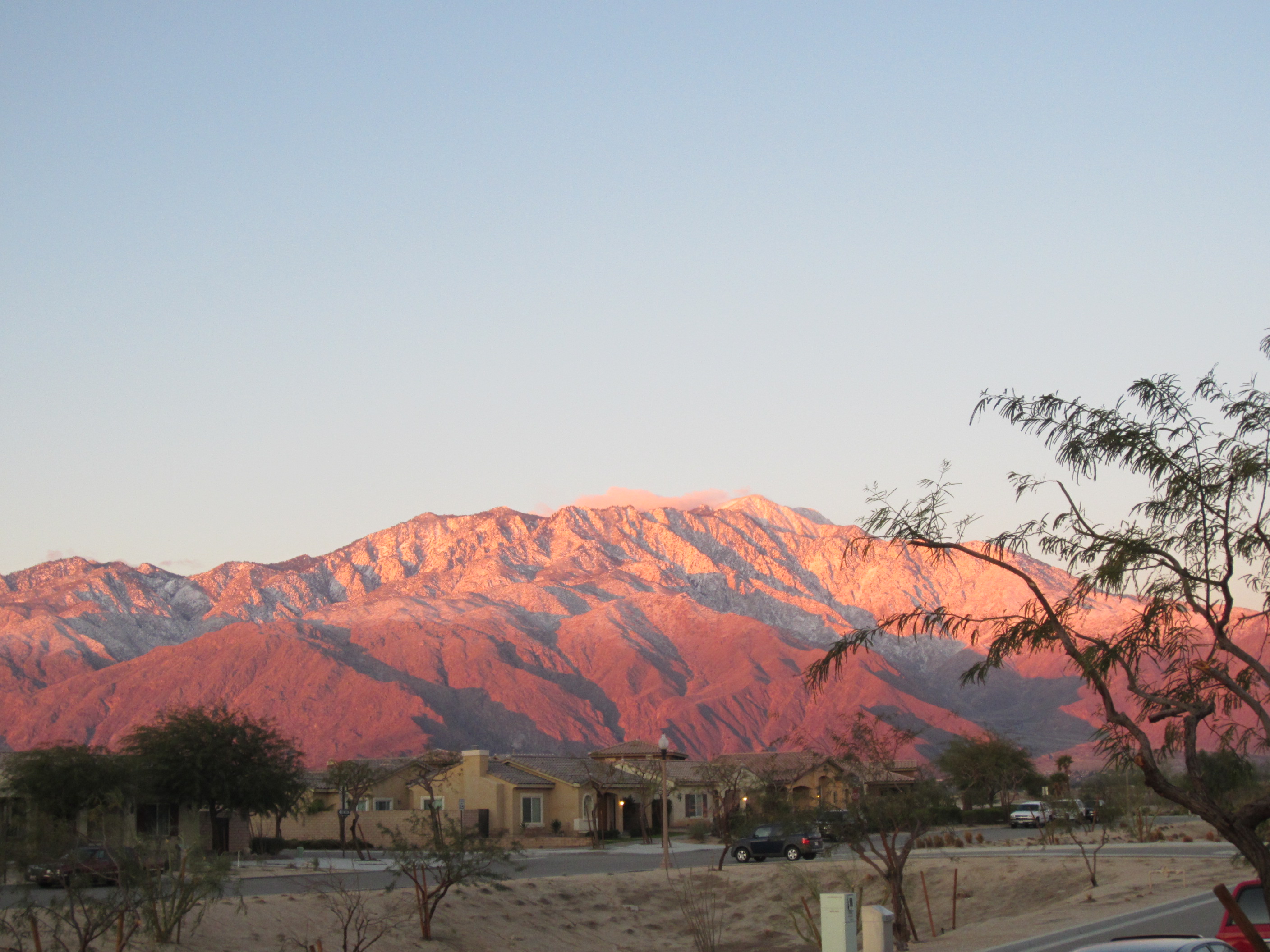
Mother Nature can be quite the vixen.  By the time I buckled the chinstrap of my helmet the clouds had cleared and what awaited us was an incredibly bright sky with new fallen snow twinkling like diamonds off Mt. San Jacinto in IMG_1619the distance and only the slightest zephyr.  While the temperature was on the brisk side I figured that was far preferential to having a warmer than normal day – at least for us cyclists.  Upon arrival at the staging area Syd, Joan and I saddled up our hybrid bikes with more than 10,000 other event participants and migrated by foot toward the starting line to the music of the local high school band all the while inching closer to a point where we could actually ride.  20 minutes after the scheduled start of our Event we were finally balancing on our wider than normal seats and peddling north on Indian Canyon in full exhilaration. Joan bid us adieu as she didn’t want to be perceived as a “slow poke” and we agreed to wait for her at the finish.  Syd had provided a few warnings to me earlier, since he has a storied biking history that has included cross-country rides (not “cross country” like a high school track team but “cross country” as in all the states between California and Florida).  Perhaps the best advice he gave me was to understand that bikes don’t have brake lights and that it was possible that riders in front of me would stop for any number of reasons, traffic lights being chief among them, and it was important for my well-being to pay attention.  While it might make for a better story if there was some mishap, nothing of the sort occurred during our ride; I think primarily because the type of bikes we were riding allow for regular athletic shoes and didn’t require binding of our feet to the pedals in a way that only resembles ski bindings.

As the herd plowed its way through the streets of Palm Springs and other nearby cities, past emerald IMG_1649colored country club golf courses and tennis resorts, obstructing traffic all the way, we found comfortable gaps in which to exist so as not to be hassled by the other riders; that is until we were periodically forced to stop en-masse at a number of controlled intersections in order to allow the motor vehicles to pass.  A certain amount of physical coordination was required at these infrequent stops so as to stay upright but I can proudly say that both of my knees are in pristine condition today – at least on the surface.  We were peddling along so well that we decided to bypass the first SAG stop at the Desert Princess Resort, some 6 miles out from the starting line (SAG stands for Support And Gear, but mostly snacks).  We agreed we would avail ourselves of the next (and final) SAG stop at Cathedral City High School, another 12 miles out since we were skipping this first one.  While speed was never a requirement or recommendation I was self-impressed when Syd announced (he had an odometer on his bike) we hit 21 miles-per-hour on the downhill portion of Ramon Road near the Agua Caliente Casino, that is until he told me he once averaged 21 MPH for an entire ride of something like 50 or 500 miles.  The details were lost in the grim dose of reality that was clouding my brain.  We were going along really well, even on the uphill climb on Bob Hope Drive from Ramon Road to Gerald Ford until I started to feel my quadriceps in a way that reminded me of two-a-day football practices in which I participated the last time in 1970.   I did my best to suck it up and started to anxiously anticipate the looming SAG stop at Cathedral City High School now probably only a couple of miles away.

As I started to recognize the terrain that would lead us to the school parking lot the cruelest of ironies presented itself.  Syd had the audacity to mention that a “pretty good hill” was right in front of us on DuVall Road and of course my inability to stop thinking about Pink Elephants manifested itself in the use of at least 21 of the 24 gears available with various configurations of the derailleur on my bike to help complete this leg of the ride without any embarrassing delays just before we pulled into the school parking lot.  As I parked my bike with wobbly thighs helping to engage the kick stand we made our way toward tables lined with teenagers thrusting various 3 ounce Dixie Cups into the hands of those before us.  Contained in these cups, no-doubt, was some high-tech energy supplement that looked and IMG_1666tasted suspiciously like Peanut M&Ms.  Directly adjacent were large jugs of colored liquids that are normally used for dumping on victorious football coaches and another table of sample sized portions of Clif Bars and something called “Gel Shots” that I was suspicious might contain alcohol but learned later were really 100 calories of liquefied sugar.  We loaded up our pockets, gulped the high-tech energy supplements and colored liquids as we listened to live Jazz Music along with a couple hundred of our fellow Event participants.  The musical entertainment made me long for a beer or a glass of wine which if that could have been part of the respite would have required the dispatching of a taxi to get me back to the finish line. After no more than 5 or 6 minutes of “rest” we remounted our bikes and continued along our path to the finish line that was now about 6 miles in the distance, somewhat refreshed.

Not more than a few minutes lIMG_1676 (2)ater as we were making a swinging right-hand turn I thought I recognized a rider a few bikes in front of us.  As I kicked my mechanical stead into a higher gear and caught up to the familiar figure I immediately recognized that it was Joan whom we hadn’t seen since our goodbye at the starting line.  Wondering aloud how she could be in front of us when she was worried that we would be waiting on her I quickly learned that she had neither stopped at the first or second SAG depot; I quickly changed the subject as we rode briskly along toward the conclusion of our ride.

It was somewhat thrilling to approach the finish in downtown Palm Springs in the shadoIMG_1685 (3)w of that much larger than life statue of Marilyn along with the thousands of other riders, all of whom had their routes converge into the common finish line, whether 1 or 100 mile riders, complete with clocks marking time and T-shirts being thrust into the hands of the finishers.  With the glow of self-satisfaction at least internally illuminating my psyche we quickly made our way back to the parking lot and mounted our bikes on the SUV rack for the ride back home.

I’m headed for the Jacuzzi this afternoon.  I think next year I’ll do the 50 mile ride.

IMG_1608


Today is known around our planet as World Cancer Day.  Its a day when health organizations all ACSlogoover the world are sending the message that eradication of cancer must be a global health priority.  It is estimated that more than 7.5 Million people will die from cancer worldwide this year alone.  The Empire State Building in New York City will be lit in blue and orange to commemorate the occasion, in the official colors of the Union for International Cancer Control (UICC) which organizes World Cancer Day.

Part of the message the UICC wants to deliver is that many myths and misunderstanding exist with regard to cancer.  Specifically the emphasis is on these 4:

  • Myth 1: Cancer is just a health issue. Truth: Cancer is not just a health issue. It has wide-reaching social, economic, development, and human rights implications.
  • Myth 2: Cancer is a disease of the wealthy, elderly and developed countries. Truth: Cancer is a global epidemic. It affects all ages and socio-economic groups, with developing countries bearing a disproportionate burden.
  • Myth 3: Cancer is a death sentence. Truth: Many cancers that were once considered a death sentence can now be cured and for many more people, their cancer can be treated effectively.
  • Myth 4: Cancer is my fate. Truth: With the right strategies, a third of the most common cancers can be prevented.

Cancer will affect everyone of us in some profound way during out lifetimes.  Visit www.cancer.org to learn more about the activities of the UICC and the American Cancer Society in their effort to defeat cancer.  14 Million cancer survivors are celebrating birthdays this year thanks in part to the American Cancer Society.


IMG_1603 (2)A couple of weeks ago I received an email from my daughter, Melissa, requesting one of my recipes.  Apparently she was able to purchase some beef Tri-Tip steaks at her local Costco and remembered it was one of my favorite cuts of meat to use on the BBQ.  What made this request unusual is that Melissa lives in Canberra, ACT, Australia.  In all my travels to Australia (I’ve been there more than 20 times) I have never seen Tri-Tip sold either in roast form or cut into steaks.  In fact, its only been the last couple of years that Tri-Tip could be had in Texas.  I know that because my brother, Bob, wanted to replicate my recipe after a visit with his family to California only a couple of years ago and he had a difficult time finding the elusive cut in or around Austin.  I suppose now that since Tri-Tip has apparently found its way to the capital of Australia that is a further testament to the ever-reaching tentacles of Costco.  In any event, I can’t think of a single family member (save my daughter Candace, a vegetarian) that doesn’t love Dad’s BBQ Marinated Tri-Tip Steaks.

While known by different names around the globe the Tri-Tip is a triangular roast cut from the bottom sirloin of each side of beef.  In roast form, in the butcher’s case, they range from 1.5 to 4 pounds.  The average Tri-Tip is nicely marbled providing some excellent flavor.  The cut came to fame in California in the 1950’s as a local BBQ specialty in the town of Santa Maria, California where the roasts were typically cooked whole, usually over an open wood fire and then sliced cross-grain before serving.  The much-loved Tri-Tip is at the center of menus for local restaurants and fund-raisers in and around the Santa Maria area.

IMG_1602While I have BBQ’d the whole roasts myself I find that cutting the roast into individual steaks and then barbecuing those steaks over an open flame is the best execution.  When on sale, Tri-Tip roasts can be had for under $3 per pound here in Southern California and since there is very little waste the steaks end up at about 1/3 the price of boneless rib-eyes with arguably as much flavor and less fat.  In some cases there is a layer of fat that can run about 1/8 inch thick that must be removed from one side of the roast before carving the steaks .  However, when I purchase the roasts from my neighborhood Stater Brothers market (one of the few chain grocers to still have an in-store butcher shop) that band of fat is often already trimmed away.  Costco and many other stores do sell the Tri-Tip already trimmed into steaks but the price is commensurately higher and I prefer to trim my own.  When Tri-Tip roasts are on sale, I usually buy 3 or 4 roasts and then cut them all up into steaks; divide the steaks into packages of varying sizes in Ziploc freezer bags and label them with the date purchased before stashing in the freezer.  They keep nicely for  up to 6 months and require about 24 hours in the fridge to thaw before cooking.

IMG_1582 (2)I always marinate the steaks for at least 24 hours before cooking.

Dad’s Marinated Tri-Tip Steak

2-3 pound WholeTri-Tip Roast

1 Large Onion

2 Red, Yellow or Green Bell Peppers

½ cup Teriyaki Marinade

1/8 cup pickled jalapeno slices

2 Tbsp minced garlic

1 Tsp Seasoning Salt

2 Tbsp  Cracked Black Pepper or Montreal Steak Seasoning

IMG_1587 (2)Trim Tri-Tip Roast of excess fat (leave some intact for additional flavor if desired).  Cut the roast into steaks approximately 1 inch thick weighing 4 to 6 ounces each (will make 8 to 12 steaks).  Set aside.

Julienne the onion and bell pepper into ¼ inch wide strips.  Combine with all other ingredients in large mixing bowl.  Stir until well mixed.  Place steaks into Gallon size Ziploc bag then pour contents of mixing bowl into the bag, seal, and shake well.  Lay flat in refrigerator for 24 hours, turning bag occasionally.

Remove steaks from marinade reserving everything left in the Ziploc bag.  Liberally Season the IMG_1595 (2)steaks with Cracked Black Pepper or Steak Seasoning.  Remove vegetables from marinade along with 1 oz of liquid and place vegetables and liquid in an aluminum foil into a “hobo package”.

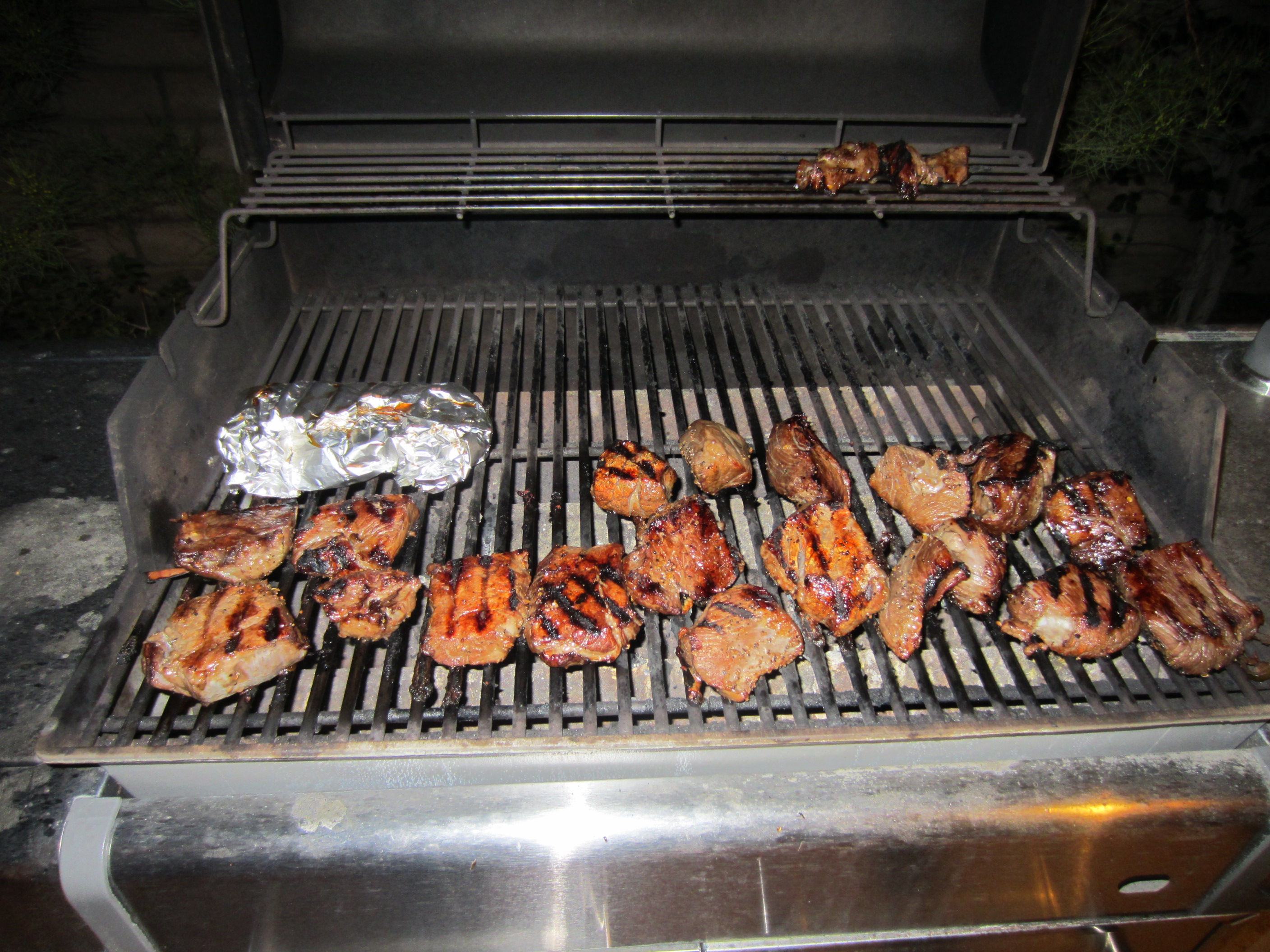
Pre-heat grill to High.  Place vegetable hobo package directly on grill approximately 5 minutes before steaks, turn once when turning steaks.  Place steaks on grill and cook until “done”, as desired,(approximately 3-4 minutes, each side, for medium rare).

Remove hobo package and steaks from grill.  Serve steaks with share of vegetables from the hobo package covering.

Serve with oven fried Potatoes or baked potato and grilled asparagus.

Wine pairing:  Pinot Noir or Cabernet Sauvignon


“It is not the critic who counts: not the man who points out how the strong man stumbles or where the doer of deeds could have done better. The credit belongs to the man who is actually in the arena, whose face is marred by dust and sweat and blood, who strives valiantly, who errs and comes up short again and again, because there is no effort without error or shortcoming, but who knows the great enthusiasms, the great devotions, who spends himself for a worthy cause; who, at the best, knows, in the end, the triumph of high achievement, and who, at the worst, if he fails, at least he fails while daring greatly, so that his place shall never be with those cold and timid souls who knew neither victory nor defeat.”

Theodore Roosevelt, April 23, 1910

I can’t remember ever hearing or reading that statement before my Dad died this past October 29.  It obviously meant a lot to him because we found it printed in various forms among his belongings. In fact, it was framed and mounted on the wall of his garage next to other things that were meaningful to him between buckets full of old golf balls, broken tees and tools that had not seen light of day in decades.  He had another copy of the “poem” as some of our family members have come to call it in the stack of paperwork he kept close at hand next to his recliner.

Sometimes incongruous events take place in our lives that teach us valuable lessons.  Over the past few days I have been following the exploits of Blues musician as he competed in the International Blues Challenge in Memphis, Tennessee.  I don’t know the musician; I barely know the blogger that has been keeping his reader’s apprised with bits and pieces of progress reports but I have been drawn to the updates like bees to honey.  I can’t even tell you that I know much about the Blues beyond the ability to appreciate and certainly not enough to know what it takes to win a competition like this.  But as I sadly read the report this morning that the focus of these regular updates had been eliminated from the Challenge my thoughts turned to the dog-eared, yellowed version of Teddy Roosevelt’s words that my father so proudly displayed in his garage.


IMG_1577 (2)We always wonder what the right thing is to do with our newspapers when we go on a trip:  Ask a neighbor to pick them up or call the newspaper and request a “Vacation Hold”?  I’ve been lobbying for internet only delivery at our home for some time but my wife still loves to hold the paper and get black ink all over her fingers while having her morning coffee.  Newspapers all over the country are in deep trouble for myriad reasons. Recently the New Orleans Times-Picayune has dropped daily publishing in favor of just 3 printed versions each week in a cost cutting move. This kind of publicity can’t help.

From the Los Angeles Times, January 31, 2013

Thieves target homes of Times subscribers
Four are arrested after $1 million in property is stolen from readers who were out of town.
BY Andrew Blankstein

Four men have been arrested on suspicion of burglarizing the homes of Los Angeles Times newspaper subscribers who were on vacation, according to the Los Angeles County Sheriff’s Department.

The burglars allegedly stole $1 million in property over the last three years.

Detectives said one of the suspects obtained lists of subscribers who had submitted “vacation holds” to a vendor that distributes newspapers for The Times. Officials said they have identified 25 victims but believe there are more than100.

Sgt. Michael Maher of the sheriff’s Major Crimes Bureau said most of the break-ins occurred along the 210 Freeway in eastern L.A. County and western San Bernardino County.

Approximately $100,000 worth of personal property, including artwork, golf clubs and guitars, has been recov- ered as a result of a six-month investigation, Maher said. But investigators believe the thieves stole many more items, including jewelry and collectible coins that they later sold.

“They took everything from televisions right down to the toothpaste,” he added.

Deputies said Duane Van Tuinen, 51, of Azusa is believed to have supplied the burglary crew with addresses from stolen vacation lists. Sheriff’s officials said he serviced machines in the distribution centers that subcontract with The Times to deliver the paper. He was arrested Wednesday.

Randall Whitmore, 43, of La Verne; Joshua Box, 43, of Arcadia; and Edwin Valentine, 52, of Covina have been booked on suspicion of receiving stolen property and possession of stolen property. Deputies are seeking a fifth suspect.

Sheriff’s officials said The Times has cooperated fully with the investigation.

Nancy Sullivan, a Times spokeswoman, said the newspaper has made changes in its delivery policies since the incident.

“The Los Angeles Times was contacted several months ago about criminal activity which may have been linked to subscriber delivery information. We immediately launched an internal review and collaborated with the Sheriff’s Department as matters unfolded, including honoring their request to keep the matter confidential because the investigation was active,” Sullivan said. “The Times sympathizes with those who have been harmed and joins the other victims in thanking the Sheriff’s Department for their hard work.”

Sullivan added: “We continuously review and upgrade our policies and systems to protect and best serve our customers.” She said that the paper will no longer share vacation information with distributors.

Authorities said the thieves would case the home of the subscribers who had submitted vacation holds to make sure the owners were away before striking. In some cases, the burglars found the victims’ cars keys. They then loaded up the vehicles with stolen items and drove off, Maher said.

Officials said a break in the case came last summer, when Glendora police pulled over one of the suspects who had a list of addresses as well as stolen property. Sheriff’s detectives spent weeks studying the list and eventually determined the addresses belonged to Times subscribers who had stopped delivery while on vacation. Maher said detectives at first probed whether the list was obtained through computer hacking but eventually determined that it was an inside job.

Subscribers who believe they were burglarized after placing a vacation hold are asked to call the sheriff’s Major Crimes Bureau detectives at (562) 946-7893 and supply a police report number as well as a description of the stolen items.

TripBucket

We inspire our members to pursue their unique adventures and the accomplishment of their dreams.

St. Louis CEOs Against Cancer

Stories of local interest for the St. Louis CEOs Against Cancer

Seize every opportunity

Do you dream of travelling the world? Do you want to climb a mountain or go hang gliding over rio de janeiro? Make your dreams come true like I am

STORYTELLER

Photographer, Designer, Editor and Educator Ray Laskowitz talks about pictures and their back stories.

Blog By Boomer

One Boomer's Perspective on Living

WordPress.com News

The latest news on WordPress.com and the WordPress community.