One in five American adults smokes some type of tobacco product. Astonishing! In the face of irrefutable evidence that smoking significantly shortens life span and denigrates the quality of that reduced time the beat apparently goes on. In addition to the guarantee of an earlier death, the economic consequences to the individual and society as a whole are staggering. The Center for Disease Control (CDC) reports that 443,000 deaths occur in the USA each year related to smoking; Still; Really. Lung disease, cancer and heart ailments are at the top of the list of those smoking related ailments that contribute to the earlier than necessary demise of smokers.
 The New England Journal of Medicine recently published a study wherein researchers discovered that quitting smoking at every age up to 64 can add from 4 to 10 years to the life expectancy of the new non-smoker. The sooner the activity is stopped, the better the life expectancy. The study concluded that both men and women that died in 2006 and were smokers at the time of their demise were about 3 times more likely to have died during the term of the study than non-smokers. This disparity is partly attributable to increased health standards for the non-smoking population. Consider also that among Americans that died of lung cancer in the early 1960’s women who smoked were 2.7 times more likely to have died from that horrible disease than non-smoking women, while men in the 1960’s died at a rate that was 12 times more likely. Pretty staggering info that pales in comparison when you come to understand that by 2010 that both men and women that died of lung cancer were smokers was 25 times the rate of non-smokers. Women, I suspect, caught up to men in this regard due to the increased social acceptability of smoking by females and the larger influx of women into the workforce. The increase in the overall death rates is in no small part attributable to advances in health care that has helped to stem the tide of other life ending conditions but apparently not so much lung cancer.
We have a number of video tapes of our family when we were kids in the 50’s and 60’s, usually of family gatherings around Christmas time. In almost every tape the adults are seen with cigarettes burning in one hand and a drink in the other while the kids are scrambling at their feet to rip open their presents – quite often with one or more of the female adults obviously pregnant. Our parents weren’t being careless or irresponsible, the simple fact is they did not KNOW what we know today about the harm that smoking causes. I remember my Dad quit in the 70’s; cold turkey. It was tougher for my Mom but she finally gave up the cigarettes in the 80’s as best as I can remember.
I smoked off and on from 1971 until 1984 – I suppose because everyone else did. Mostly I worked office jobs and even if you didn’t have your own you spent your days inhaling everyone else’s tobacco smoke because that was just the way that it was. When I quit for good it was as much for practical reasons than concerns about my health; I had just burned a hole in a brand new tie. It wasn’t the first time it happened but I was committed it would be the last.
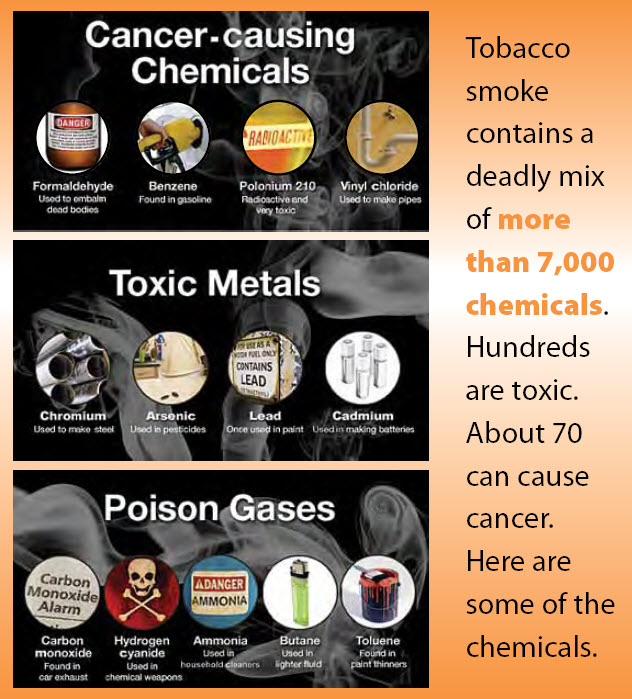
What we know today about cancer includes the understanding that you don’t “catch” cancer like a cold or the flu. While there is a growing belief that viruses may be at the root cause of some cancers, many cancers require an “irritant” to which we are exposed over an extended period of time along with some genetic predisposition. And, in many cases, it takes a good long time for the cancer that may be growing inside of us to become noticeable to health professionals. Consider the mountain of evidence that exposure of our Soldiers, Sailors and Marines to Agent Orange and other defoliants in Vietnam and Korea are now manifesting themselves in deadly lymphomas, prostate cancer, respiratory (lung cancer) and skin cancers – in many cases 40 or more years after the exposure. Lots of these service personnel also smoked creating what has proven to be an especially lethal cocktail. Consider also that defoliants have been in use for agricultural and landscaping purposes all over American soil, albeit at much lower concentrations than in the forests of Asia where we so indiscriminately sprayed. There is a growing body of evidence that chemicals of many kinds contain the keys to unlock predisposed molecule of DNA toward cancer in those of us that possess them. Tobacco products release a number of chemicals into our organs when inhaled including cyanide, arsenic and lead – known carcinogens Placing one of these burning time bombs between your lips is literally playing with fire.
I remember when Obamacare (The Affordable Health Care Act) was first being debated and we were told that it would take a number of years for all the features and benefits, along with the resulting costs, to be calculated and understood. What folks heard (or wanted to hear) was that the program would guarantee affordable health care coverage for everyone but that the details still needed to be worked through. Since most of the remaining major changes that will take place are scheduled to kick in beginning January 1, 2014 those heretofore unknown details are beginning to squirt out. Consider the consequences for smokers.
There is a little talked about provision in the Act that allows insurers to charge smokers buying individual policies premiums that are as much as 50% higher than non-smokers. Estimates range up to an additional $4,250 per year for coverage for a 55-year-old smoker as compared to his/her non-smoking contemporary. Younger smokers will be charged lower penalties but I think its safe to project those surcharges will escalate along with age and a growing body of evidence that smoking in and of itself increases the potential healthcare expenses for individuals over their lifetimes. While it is widely believed that surcharges will not be allowed for policyholders that may be overweight or have other pre-existing conditions that potentially require more medical care than average, the discrimination against smokers is allowable and likely.
Do yourself, your family, friends and bank accounts a favor. If you smoke, quit now. If you don’t smoke, don’t ever start.



 Blog By Boomer